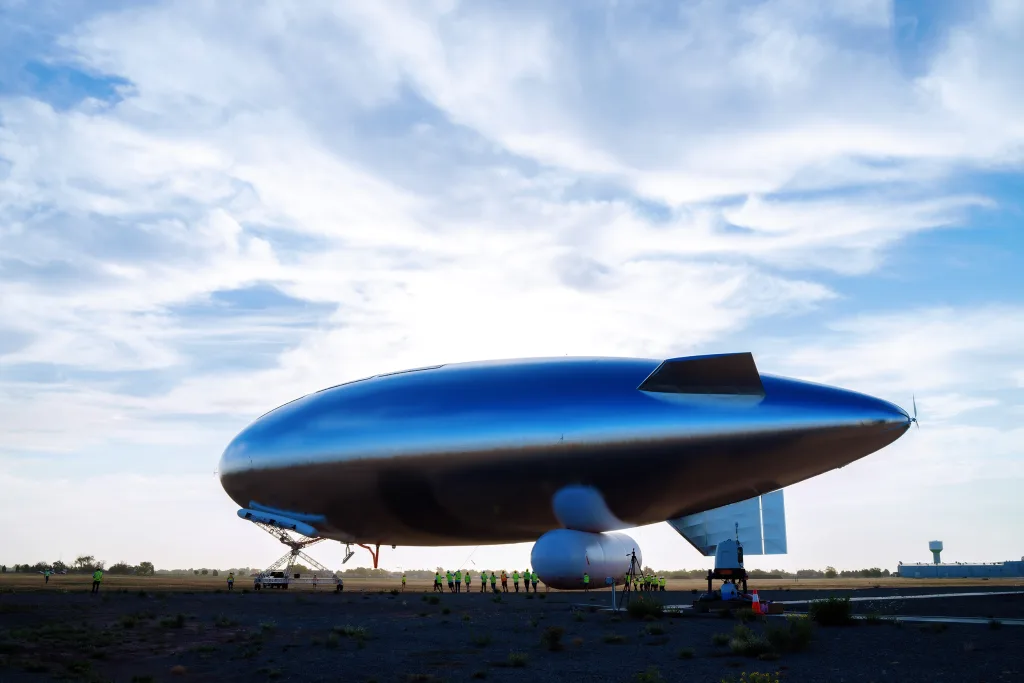
20 Pro Pieces Of Advice For Deciding On The Sceye Platform
Sceye HAPS Specs Include Endurance, Payload And Breakthroughs In Battery Technology1. Specifications show you what a Platform Can Actually Do
There's a tendency within the HAPS industry to talk about ambitions rather than engineering. Press releases discuss coverage areas agreement with partners, commercial timelines, but the harder and more relevant discussion is about specifications -- what exactly the vehicle is carrying and how long it remains in operation, and what energy systems make continuous operation feasible. To anyone who is trying to determine whether a stratospheric system is capable of achieving its mission or is in the development phase of promising prototypes, the payload capacity, endurance data, and battery performance are where the actual substance lives. False promises of "long endurance" and "significant payload" are a breeze. Delivering both simultaneously at a high altitude is the engineering hurdle that differentiates credible programs from bold announcements.
2. The Lighter Than Air Architecture Alters the Payload Equation
The main reason why Sceye's airship design can bear a significant load is that buoyancy can handle the fundamental task of keeping the vehicle airborne. It's not an easy difference. Fixed-wing solar aircrafts must produce aerodynamic lift throughout the day which uses energy and also imposes structural restrictions that limit how much extra mass a vehicle can transport. Airships floating at equilibrium in the stratosphere doesn't spend energy fighting gravity the same way - that means that the energy generated through its solar array and the capacity of the vehicle is able to be utilized for propelling, stationkeeping and paying load operation. This creates the payload capacity that fixed-wing HAPS designs with comparable endurance actually struggle to match.
3. Payload Capacity determines mission versatility
The practical importance of higher capacity payloads becomes evident once you consider what soaring projects actually call for. A telecommunications payload - antenna systems including signal processing hardware beamforming equipment -- carries significant weight and volume. So does a greenhouse gas monitoring suite. So does a wildfire detection in the form of an Earth observation. The execution of any of these tasks effectively requires equipment that is large. Multi-tasking requires more. Sceye's airship requirements are formulated around the concept of a stratospheric platform to be able to carry a genuinely effective combination of payloads than forcing users to select between observation and connectivity due to the fact that it's impossible to have both at the same time.
4. Endurance Is Where Stratospheric missions can win or lose
A platform that can reach high altitudes for more than about 48 hours prior to having to descend is useful for demonstrations. A platform that is able to remain in position over a period of months or weeks during the course of developing commercial service. The difference between the two options is essentially an energy matter, specifically, if the vehicle is able to produce enough solar power during daylight to power all of its systems and charge its batteries to keep its full functionality throughout the night. Sceye endurance targets are designed around this diurnal challenge, treating overnight energy sufficiency not as a goal to be achieved instead as a of the design criteria that everything else should be designed around.
5. Lithium-Sulfur Battery Represents a Genuine Step of Change
The chemistry of the battery that powers conventional consumer electronics and electric vehicles -- mostly lithium-ion -- has energy density characteristics that can cause limitations for stratospheric endurance applications. Every kilogram of battery mass carried high will not be available for payload, yet you'll need enough energy to keep a massive platform operating throughout a massive night. The chemistry that makes lithium-sulfur work changes this significantly. With energy densities that can reach 425 Wh/kg for lithium-sulfur batteries, they will store significantly more power per pound than similar lithium-ion devices. For a vehicle that is weight-constrained where every grams of battery mass represents an opportunity cost in payload capacity, this rise in energy density isn't marginal, it's structurally significant.
6. The latest advances in solar cell efficiency are the other half of the Energy Story
Battery energy density determines how much power is stored in your battery. Solar cell efficiency will determine how quickly you'll be able to replenish it. Both are essential, and improvement in one without advancing both creates a negative energy architecture. High-efficiency photovoltaic technology such as multi-junction models that harness a greater spectrum of solar energy, compared to traditional silicon cells - have significantly increased the energy harvesting capabilities of solar-powered HAPS cars during daylight hours. When combined with lithium-sulfur storage these advancements make a truly closed power loop feasible by generating and keeping enough energy throughout the day that all systems can be operated with no external energy input.
7. Station-Keeping Draws Constantly from the Energy Budget
It's easy to view endurance solely in terms being in the air, but for an stratospheric platform, staying airborne is only part of the equation for energy. Station keeping -- actively maintaining position against stratospheric winds with constant propulsion generates power constantly and is an important portion of the total energy use. The energy budget needs to be able to accommodate station keeping along with payload operations, avionics, thermal management, and communications systems all at once. This is why specifications that mention endurance but do not specify what systems are operating at the time of endurance are difficult to judge. True endurance estimates assume full operational load, not just a minimally configured vehicle coasting with payloads shut off.
8. The Diurnal Cycle is the constraint in design that all else Is Flowing From
Stratospheric engineers focus on the diurnal cycle, the daily rhythm of availability of solar energyas the principal constraint upon which platform architecture is designed. When it is daylight the solar array needs to provide enough power for every system and recharge the batteries to a sufficient level. At night, the batteries have to power all systems through the dawn hours without losing its position, decreasing payload performance, or entering any type of reduced-capability mode that would disrupt a continuous monitoring or communication mission. The design of a vehicle that can thread this needle consistently every day of the week, for months at a stretch is the fundamental engineering issue of solar-powered HAPS development. Every specification decision (solar array area (including battery chemistry), propulsion efficiency, and power draw of the payload -all are a result of this single rule of thumb.
9. The New Mexico Development Environment Suits This Kind of Engineering
Developing and testing a stratospheric airship requires airspace, infrastructure, and atmospheric conditions that aren't easily accessible in all. Its location in New Mexico provides high-altitude launch and recovery capabilities, crystal clear sky conditions for testing solar, plus access type of unrestricted, uninterrupted airspace long-term flight testing needs. Within the field of aerospace companies in New Mexico, Sceye occupies one of the most unique positions -- specifically focused on stratospheric lighterthan-air systems, not rocket launch programs commonly seen in the vicinity. The engineering rigour required in order to evaluate endurance claims, and battery performance in actual stratospheric conditions is precisely the type of work that benefits from a special test setting instead of sporadic flight missions elsewhere.
10. Specs That Hold Up Under scrutiny are what commercial Partners Have to have
Ultimately, the reason specifications are more important than just technical value is because commercial partners who make investment decisions must ensure that the numbers are accurate. SoftBank's commitment to a national HAPS infrastructure in Japan as well as a pre-commercial network to be launched in 2026. The plan is based upon the certainty that Sceye's platform will perform as described in operational conditions not only in controlled tests, but throughout the mission durations that a commercial network requires. Payload capacity that lasts with a complete telecommunications and observation suites aboard endurance measurements that are validated through actual stratospheric operation, and battery performance tested over actual diurnal cycles are what transform a promising aerospace program into a telecoms infrastructure that a major operator is willing to stake its plans for network expansion on. Follow the recommended investment in future tecnologies for blog recommendations including Wildfire detection technology, marawid, Mikkel Vestergaard, Real-time methane monitoring, softbank haps pre-commercial services japan 2026, softbank haps pre-commercial services japan 2026, sceye haps airship payload capacity, stratospheric internet rollout begins offering coverage to remote regions, sceye aerospace, sceye careers and more.
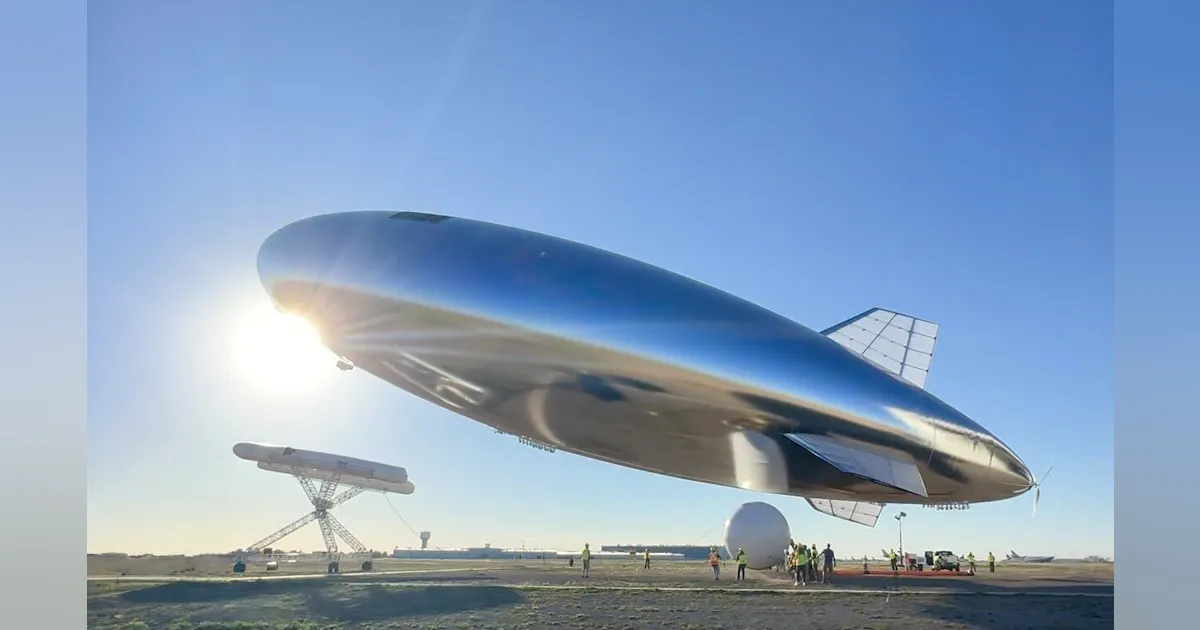
SoftBank'S Pre-Commercial Haps Services: What's In Store For 2026?
1. Pre-Commercial Is A Specific and Meaningful Milestone
The terminology matters here. Pre-commercial service is particular phases of development of any brand new communications infrastructure -- going beyond the experimental demonstration, beyond proof-of-concept flying campaigns, and into areas where real users enjoy real service under conditions that approximate what a fully commercially-oriented deployment would be. It implies that the platform is stable, the signal is in compliance with quality thresholds that real-world applications rely on, the ground infrastructure has been interfacing with the spheric telecom antenna in a way that is safe, and all regulatory security clearances are in the right place to use the service over areas that are heavily populated. Reaching pre-commercial status is not a milestone for marketing. It's an operational one which is why the announcement that SoftBank has announced its intention to reaching this status with Japan in 2026, sets an objective that the engineering on both parties of the partnership need to set.
2. Japan is the most appropriate country to Start This First
Deciding to choose Japan to host the stratospheric services of pre-commercialization isn't just a. Japan has a variety of traits that make it close to ideal as a deployment area. Its terrain -- mountainous terrain and thousands of islands that are inhabited lengthy and complex coastlines -- poses real problems in coverage that the stratospheric network is designed for. The regulatory framework is advanced enough to address the spectrum and airspace questions that stratospheric operations bring up. The existing mobile network infrastructure and services, owned by SoftBank and SoftBank, is the connectivity layer that the HAPS platform needs to connect to. And the inhabitants of the region have the device ecosystem as well as the digital skills to benefit from stratospheric broadband services without requiring an extended period of technological adoption which would slow down meaningful adoption.
3. Expect the Initial Coverage to Focus on the underserved and Strategically Important Areas
Pre-commercial deployments don't aim to cover an entire country simultaneously. The more likely pattern is a focused rollout targeting areas in which the difference between the current coverage and what the stratospheric network can bring is the largest and the strategic justification for prioritizing coverage strongest. In Japan's context, this implies island communities who are dependent on high-cost and inadequate internet connectivity via satellite, the mountainous rural areas with terrestrial network economies that have not provided sufficient infrastructure, or coastal regions where resilience to disasters is a priority in the national context due to the dangers of earthquakes and typhoons for the country. These zones provide the most precise evidence of stratospheric connectivity's value and the most useful operational data needed to refine coverage, capacity and platform management prior to a larger rollout.
4. The HIBS Standard Is What Makes Device Compatibility Possible
One of questions that one ought to be asking about stratospheric wireless would be whether they require special receivers or whether it can be utilized with normal devices. There is a solution. The HIBS framework is High-Altitude IMT Base Station -is the answer based on standards to that question. By conforming to IMT standards that power 5G and 4G networks all over the world, a stratospheric platform operating as a HIBS can be compatible with the smartphone and device ecosystem that already exists in the area of coverage. for SoftBank's prior-commercial services the subscribers who are in zones of coverage will be able to connect to the stratospheric internet using their existing devices without needing to purchase additional hardware. This is an essential aspect for any company that strives to reach the majority of people of remote regions, who require alternative connectivity options, and are not able to spend money on specialist equipment.
5. Beamforming can determine how capacity is distributed
An stratospheric location that covers a large area does not automatically have a common capacity for use across the footprint. How spectrum available and energy available to signal is distributed across the coverage region is the result of beamforming capabilities -- the platform's capability to direct its signal to the places where demand and use are concentrated rather than distributing in a uniform manner across large areas of uninhabited. for SoftBank's early commercialization phase, it is essential to demonstrate that beamforming from a stratospheric telecom antenna can be able to deliver sufficient capacity commercially to particular areas with a large coverage footprint will be just as important as showing the coverage area. Wide coverage with a small, inadequate capacity makes no sense. An individualized delivery plan of really usable broadband to specific service areas is evidence of the commercial model.
6. 5G Backhaul applications could precede Direct-to-Device Services
Certain deployment scenarios an early and easy to prove the validity of using stratospheric connection does not involve direct-to consumer broadband but 5G backhaul, which connects existing ground infrastructure in regions where terrestrial backhaul is inadequate or unavailable. A remote community could have some equipment on the ground but it's not equipped with the high-capacity link to the greater network that is necessary. The stratospheric technology that provides that backhaul link can provide functional 5G coverage to communities that are serviced with existing ground infrastructure without the need for end users to interface with the stratospheric system directly. This application is simpler to verify technologically, offers clearly quantifiable benefits, and improves operational confidence in platforms performance before the advanced direct-to devices service layer is added.
7. "Sceye's Platform" Performance for 2025 Sets the Stage for 2026.
The timeframe for pre-commercial services from 2026 depends entirely on what will happen when the Sceye HAPS airship achieves operationally in 2025. Validation of station-keeping, payload performance under real weather conditions, the behavior of the energy system across a variety of diurnal cycles, as well as the integration tests required to verify that the platform works with SoftBank's network infrastructure all require maturity prior to the start of commercial services. Updates on Sceye HAPS airship performance through 2025 are not just peripheral reports, they are the leading indicators of which milestones in 2026 are tracking in line or is accumulating the type financial debt that extends commercial timelines to the side. In 2025, the progress made by engineers is the story of 2026 being written in advance.
8. Disaster Resilience will be Tested and Not Just a Claimed One
Japan's exposure to disasters means that any stratospheric service that is pre-commercial and operating across the country will surely encounter a variety of conditions -- storms, earthquakes, disruptions to infrastructure- that will test the system's resilience and its utility as an emergency communications infrastructure. It's not a limitation of the deployment context. It is one of its greatest advantages. A stratospheric platform that operates a station, and maintains connection and observation capabilities in the event of an earthquake or weather event in Japan provides a proof point that no amount of controlled testing will ever reproduce. The SoftBank preliminary commercial phase will produce tangible evidence of how stratospheric infrastructure performs when terrestrial networks are compromised -- exactly the type of evidence that all other potential operators of catastrophe-prone countries need to observe before committing their own deployments.
9. The Wider HAPS Investment Landscape Will React to What happens in Japan
It is true that the HAPS sector attracted meaningful investment from SoftBank and others, but the wider telecoms and infrastructure investment community remains a watching brief. Large institutional investors, national telecoms companies in other countries and even governments who are studying stratospheric infrastructure for their monitor and coverage needs are all monitoring what is happening in Japan with keen interest. A successful launch of precommercial infrastructure -- platforms on station or services, operational and the performance metrics that meet thresholdsand will boost investment decisions across the sector in ways that continuing pilot flights, and announcements of partnerships do not. However, any delays or shortfalls in performance will lead to an adjustment of timelines throughout the entire industry. The Japan implementation is significant for the entire stratospheric connectivity sector, not only that Sceye SoftBank partnership specifically.
10. 2026 will tell us if Stratospheric Connectivity Has Crossed the Line
There's a distinct line in the development of any new infrastructure technology between the moment when it's promising and time when it's fully realized. Aviation, electricity, mobile networks and the internet infrastructure all crossed this border at precise times -it was not the moment when this technology first tested and demonstrated, but when it was first reliable enough that institutions and people began to plan around its existence then its potential. SoftBank's initial commercial HAPS solutions in Japan represent the most credible immediate scenario when the stratospheric Internet crosses that line. The platforms' ability to hold station through Japanese winters, if beamforming can provide enough capacity for islands, and if the service is able to withstand the types of conditions Japan usually experiences, will determine whether 2026 is remembered as the year the stratospheric internet became a reality or when the timeline was rewritten. Have a look at the best sceye softbank partnership for more examples including sceye haps airship status 2025 2026, sceye haps payload capacity, sceye haps softbank partnership details, sceye earth observation, Closed power loop, sceye careers, Sceye Softbank, sceye disaster detection, what does haps stand for, HIBS technology and more.